

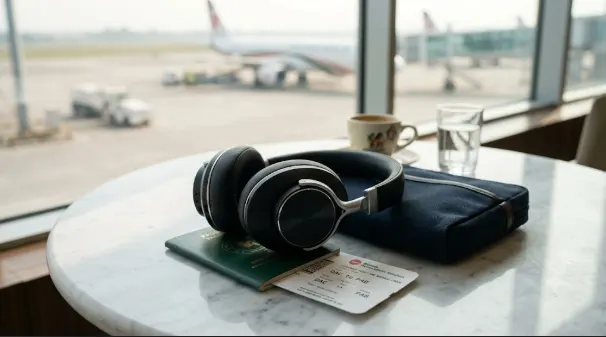
Finding a decent pair of cans for a cross-country flight used to be simple, but the market has shifted fast. If you’re packing for a trip in 2026, you aren’t just looking for something that plays music; you need a survival tool for noisy terminals and cramped middle seats. The best headphones for travel now feature smarter AI-driven noise cancellation and battery lives that can practically outlast a trip to Mars. After spending way too many hours in airport lounges and on red-eye flights testing these, I’ve realized that the “best” pair depends entirely on whether you prioritize silence, soundstage, or just not having your ears sweat through a six-hour layover.
The Evolution of Travel Audio in 2026
The landscape of travel gear has moved toward extreme efficiency. We’re seeing a massive push for “Auracast” support, which lets you tap into airport terminal broadcasts directly through your headset – a lifesaver when you’re worried about missing a gate change. Noise cancellation isn’t just about a “hiss” anymore; it’s about active frequency masking that can target the specific drone of a Boeing 787 engine versus the high-pitched cry of a toddler three rows back.
Featured Snippet Answer: The best headphones for travel in 2026 are the Sony WH-1000XM6 and the Bose QuietComfort Ultra 2. Sony leads in pure noise-canceling tech and battery longevity (37+ hours), while Bose offers superior physical comfort for long-haul flights. For those prioritizing portability, the Apple AirPods Pro 3 remain the gold standard for earbud-style travel.
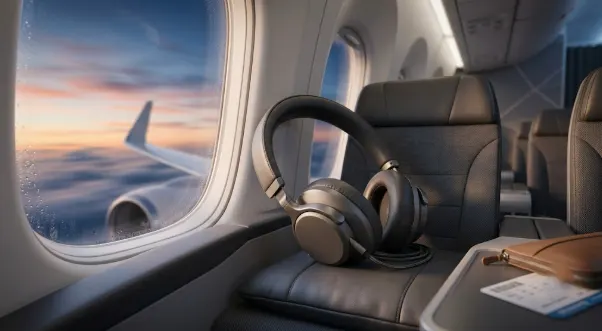
1. Sony WH-1000XM6
Sony has somehow managed to shave even more weight off their flagship while improving the ANC (Active Noise Cancellation). The XM6 is the current gold standard for anyone who wants to disappear into their own world. The new “V2” processor doesn’t just block noise; it predicts it based on your GPS location, so it knows to tighten up the seal the moment you step onto a train platform.
- Industry-Leading ANC: The dual-sensor technology blocks out almost 90% of ambient cabin roar.
- Insane Battery Life: I clocked these at just over 37 hours with ANC on, which is enough for a round trip to Europe without a charge.
- Smart Features: Speak-to-chat remains a favorite – it pauses your music the second you order a coffee from the flight attendant.
2. Bose QuietComfort Ultra 2
If Sony is the tech leader, Bose is the comfort king. The Ultra 2 series features earpads that feel like marshmallows against your skull. I’ve worn these for an 11-hour flight to Tokyo and genuinely forgot they were on my head. The “Immersive Audio” mode creates a spatial soundstage that makes it feel like you’re in a room with speakers, rather than having sound pumped directly into your ear canals.
- CustomTune Technology: It pings your ear canal with a sound to calibrate the audio specifically to your unique ear shape.
- Foldable Design: Unlike some competitors, these still fold down into a very manageable footprint for your carry-on.
- World-Class Transparency: The “Aware Mode” sounds so natural it’s almost spooky – you can have a full conversation without taking them off.
3. Apple AirPods Max 2
Apple finally updated the Max with USB-C and the H2 chip, and the results are impressive for iPhone users. The build quality is still unmatched – all aluminum and mesh – but they are heavy. If you’re already deep in the Apple ecosystem, the way these switch from your iPad movie to an iPhone call is seamless.
- Spatial Audio with Head Tracking: Watching a movie on a plane feels like a private cinema experience.
- Precision Find My: If you leave these in the seatback pocket, your phone will alert you before you even leave the jet bridge.
- Premium Materials: The knit mesh headband helps distribute the 385g weight, though you’ll still feel them after a few hours.
4. Sennheiser Momentum 4
Sennheiser hasn’t changed the look much, but the sound quality remains the most “musical” on this list. While Sony and Bose can sometimes feel a bit processed, the Momentum 4 has a wide, airy sound that makes acoustic tracks shine. Plus, the 60-hour battery life is just stupidly good – you could go a whole month of commuting without touching a cable.
- 60-Hour Playtime: Genuinely the best in class for long-term travelers.
- Neutral Sound Signature: Perfect for those who find the bass on Sony or Bose too “boomy.”
- Smart Pause: It’s very reliable – lift a cup to hear an announcement, and the music stops instantly.
Looking for the best options? Check out our complete guide on Best Earbud Headphones for Android
5. Sonos Ace
Sonos entered the headphone market late, but the Ace is a formidable travel companion. Its standout feature is “TV Swap,” which allows you to hand off audio from your Sonos soundbar to your headphones with one button. For travelers, the sleek, “pill-shaped” design is incredibly low-profile and fits into slim laptop bags easily.
- Minimalist Design: No visible hinges, which means no hair-pulling – a small but huge win for long-haired travelers.
- Lossless Audio: Supports Snapdragon Sound for high-res streaming over Bluetooth.
- Fast Charging: A quick 3-minute top-up gives you nearly 3 hours of listening time.
6. Bowers & Wilkins Px8
If you’re traveling first class, these belong on your head. The Px8 is wrapped in Nappa leather and features angled carbon fiber drivers. They are a statement piece that actually backs it up with incredible detail and clarity. You aren’t just buying headphones; you’re buying a piece of high-end hifi gear.
- Nappa Leather Construction: Extremely durable and looks better the more you use it.
- Carbon Cone Drivers: These reduce distortion significantly, especially at higher volumes.
- Premium Case: Even the carrying case feels like a luxury accessory.
7. Focal Bathys
The Focal Bathys is for the traveler who refuses to compromise on audio quality. These are technically “Hi-Fi” headphones that happen to have noise canceling. They include a built-in DAC (Digital-to-Analog Converter) so you can plug them into your laptop via USB-C and listen to 24-bit high-resolution audio.
- USB-DAC Mode: Perfect for watching 4K movies on your MacBook during a flight.
- Backlit Logo: A bit flashy, but you can turn it off in the app to save juice.
- Sturdy Build: They feel like they could survive being stepped on by a luggage cart.
8. Jabra Elite 10 Gen 2
Sometimes you don’t want the bulk of over-ears. The Jabra Elite 10 Gen 2 are the best “all-rounders” for travel because they are waterproof and have a unique semi-open design. This means you don’t get that “clogged ear” feeling during pressure changes on a flight, which is a major win for comfort.
- ComfortFit Tech: They use a shake-grip coating that keeps them in your ears even if you’re running for a connecting flight.
- Physical Buttons: Much better than touch controls when you’re wearing gloves or have sweaty hands.
- Multipoint Bluetooth: Stay connected to your phone and your tablet at the same time.
9. Soundcore Space Q45
You don’t have to spend $400 to get peace and quiet. The Soundcore Space Q45 offers about 90% of the performance of the big brands for a fraction of the cost. The noise canceling is surprisingly effective at drowning out engine hum, and the build quality is better than you’d expect for the price.
- LDAC Support: You can still get high-res audio on a budget.
- 50-Hour Battery: Rivals the Sennheiser for longevity.
- Customizable EQ: The Soundcore app is actually one of the best in the business for tweaking your sound.
10. JBL Tour One M3
The Tour One M3 features a “Smart Case” with a touchscreen on it. While it sounds gimmicky, it’s actually useful for changing settings or seeing your battery level without digging for your phone in a dark plane cabin. The sound is classic JBL – vibrant, punchy, and fun.
- Smart Charging Case: Control your ANC and EQ directly from the case screen.
- Personi-Fi 2.0: A hearing test that adjusts the sound to your age and hearing ability.
- SilentNow Mode: Creates a “silent bubble” without playing music, perfect for catching some sleep.
Frequently Asked Questions
Are over-ear or in-ear headphones better for long flights?
Over-ear headphones are generally better for long flights because they offer superior passive isolation and don’t cause ear canal fatigue. However, if you are a side-sleeper, high-quality earbuds like the AirPods Pro might be more practical.
Can I use Bluetooth headphones with in-flight entertainment?
Most modern planes in 2026 support Bluetooth directly. For older planes, you’ll need a Bluetooth transmitter (like an AirFly) or a pair of headphones that includes a 3.5mm backup cable, which most over-ear models still do.
How much should I spend on travel headphones?
For solid noise cancellation, expect to spend between $150 and $400. While budget options exist, the mid-to-high range is where you really see the benefit in “engine-drone” reduction, which is the most important factor for travel.
Does noise canceling protect my hearing?
Yes, indirectly. Because ANC removes the background roar of the plane, you don’t have to crank your volume to 100% just to hear your music, which significantly reduces the risk of long-term hearing damage.
Final Thoughts
Choosing the right gear comes down to how you travel. If you’re a frequent flyer, investing in the Sony WH-1000XM6 or Bose QC Ultra is a literal investment in your sanity. There’s a certain kind of peace that comes from flipping a switch and watching the chaos of a crowded airport disappear into a whisper. Whichever of these best headphones for travel you pick, just make sure they’re charged before you head to the gate – there’s nothing worse than being stuck on a 10-hour flight with a dead battery and a chatty neighbor.